The Creator Economy: Building a B2B Business Around Your Personal Brand
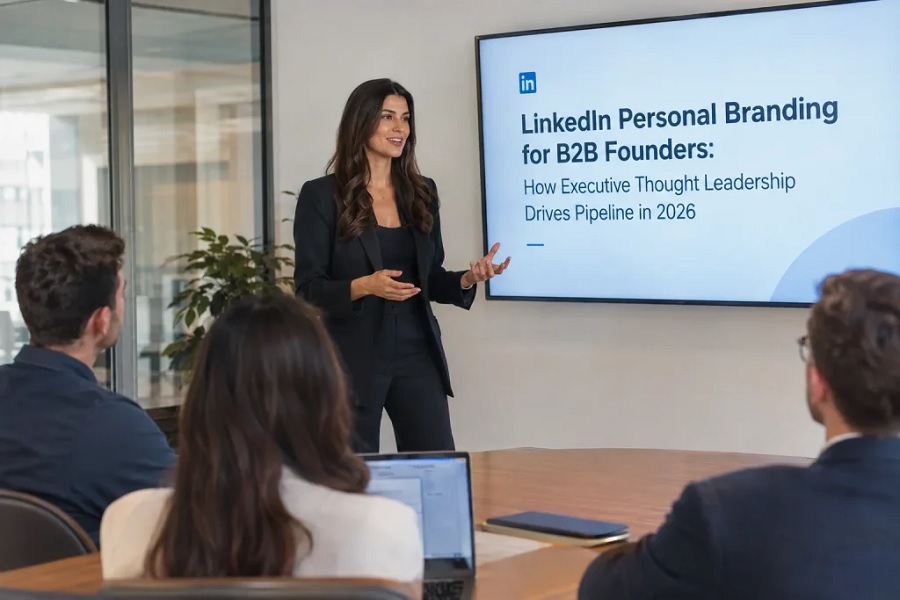
For over a decade, the popular imagination of the creator economy was defined almost entirely by consumer-facing entertainment. We watched lifestyle vloggers unbox luxury items in minimalist apartments, beauty influencers launch cosmetics lines, and travel creators document idyllic sunsets from remote beaches. Monetization for these digital pioneers relied heavily on brand sponsorships, affiliate links, and ad-revenue sharing platforms like YouTube and TikTok. It was a high-volume, highly volatile game governed by fickle algorithms and shifting audience tastes, where success was measured by sheer follower counts and vanity metrics.
However, a massive, structural maturation is currently reshaping the landscape. Beneath the glittering surface of viral entertainment, a quieter, far more lucrative revolution is taking place. Thousands of independent experts, strategists, developers, and consultants are leveraging their personal brands to build high-margin business-to-business enterprises. They are bypassing the traditional creator rat race of chasing millions of casual viewers, choosing instead to build deeply trusted, highly specialized authority networks that sell directly to corporate buyers. Transitioning a personal brand into a sustainable B2B powerhouse requires moving away from broad consumer entertainment and shifting toward rigorous intellectual property, operational leverage, and trust-based enterprise sales.
The Shift from Consumer Attention to Enterprise Trust
The fundamental physics of a consumer creator business are vastly different from those of a B2B creator business. A consumer lifestyle creator needs millions of eyeballs to generate a viable income because their monetization model relies on low-ticket transactions, such as merch sales, sponsor reads, or platform ad payouts. In sharp contrast, a B2B creator operates on an entirely different economic scale.
When your ideal customer is a venture-backed startup founder, a corporate Chief Technology Officer, or a corporate procurement director, you do not need a million followers. You only need a few thousand precisely targeted, highly relevant decision-makers who view you as the definitive authority in your niche.
This requires a complete overhaul of your content strategy. Consumer content is engineered for immediate emotional resonance and rapid algorithmic sharing. B2B content, on the other hand, is engineered for intellectual utility and professional transformation. Your daily output must solve tangible operational headaches, demystify complex regulatory environments, or offer actionable frameworks that your audience can immediately implement in their corporate roles. When you consistently publish deep, high-utility insights, you stop being viewed as a casual entertainer and start being recognized as an indispensable industry advisor.
Packaging Expertise Into High-Ticket Offerings
Having a massive social media following is entirely useless if you have nothing structured to sell when those prospective clients raise their hands. Many creators stumble because they rely solely on passive income streams like sponsorships or low-cost digital guides, failing to build a robust product ladder designed for enterprise budgets.
Monetizing a personal brand in the B2B space requires packaging your proprietary knowledge, methodologies, and frameworks into scalable, high-ticket offerings. This typically manifests across three distinct tiers: advisory services, cohort-based education, and software or implementation systems.
Designing High-Margin Advisory and Consulting Services
The most direct path to monetizing a B2B personal brand is advisory work. Corporate clients are rarely looking to hire another traditional agency laden with bloated overhead and layers of account managers; they want direct, unvarnished access to the specific subject matter expert whose content they have been consuming for months. Positioning yourself as a specialized consultant allows you to command premium hourly or project-based rates. Because the client already trusts your expertise before they ever schedule a discovery call, the traditional sales friction is virtually eliminated.
Scaling Through Cohort-Based Education and Masterminds
While one-on-one consulting is exceptionally lucrative, it is fundamentally constrained by the number of hours in a day. To break the link between your time and your revenue, successful B2B creators productize their frameworks into cohort-based courses, executive masterminds, or corporate training programs. Teaching corporate teams or ambitious professionals how to master a specific operational discipline allows you to serve dozens—or even hundreds—of clients simultaneously while maintaining exceptionally high profit margins.
The Infrastructure of Credibility: Moving Off Borrowed Land
Relying entirely on rented real estate—such as LinkedIn feeds, X timelines, or YouTube algorithms—is a perilous foundation for a serious B2B enterprise. Social media platforms constantly tweak their algorithms, bury organic reach, and alter their monetization terms overnight. Building a resilient B2B business requires systematically migrating your audience from borrowed platforms onto owned digital infrastructure.
Your personal brand acts as the top-of-funnel discovery engine, capturing the attention of professionals scrolling through their daily feeds. However, your primary objective should always be converting that casual attention into an owned relationship, most notably through a specialized, high-value email newsletter or a proprietary community portal.
Corporate decision-makers do not make high-stakes purchasing decisions based on a fifteen-second video clip they saw on a mobile app. They make those decisions after quietly reading your thoughtful, long-form analyses over a period of several months. An owned email newsletter gives you direct, unmediated access to your audience’s inbox, creating a private, distraction-free environment where you can nurture leads, share case studies, and pitch your high-ticket offerings directly to the people who matter most.
Cultivating Social Proof and Case Studies
In the consumer world, a creator can sell a product simply because it looks aesthetically pleasing or trendy. In the B2B arena, corporate buyers are putting their own professional reputations and budgets on the line when they hire you or purchase your software. They demand rigorous validation before they sign a contract.
This is why building a B2B personal brand requires an obsessive focus on documenting real-world results and customer case studies. Every time you successfully help a corporate client optimize a funnel, restructure an engineering team, or navigate a complex legal hurdle, you must extract that success story and publish it as hard evidence. Social proof is the ultimate currency of the B2B creator economy. When prospective enterprise clients see detailed, step-by-step breakdowns of how your frameworks solved an identical problem for a peer organization, their remaining skepticism vanishes.
Balancing Personal Authenticity with Institutional Scale
Perhaps the most delicate challenge in building a B2B business around a personal brand is navigating the transition from a solo operator to an institutional enterprise. In the early stages, the business is completely synonymous with you; your face is on the content, your voice is on the podcast, and your direct message inbox is the sales pipeline.
However, scaling beyond a lifestyle practice requires building systems and teams that can operate independently of your constant personal presence. This involves hiring operations managers, client success specialists, and ghostwriters who understand your intellectual framework and can help amplify your publishing output without diluting your unique voice. The goal is to evolve your personal brand from a one-person bottleneck into an authoritative umbrella organization that commands respect across your entire industry.
The creator economy has permanently democratized professional influence. You no longer need a massive media conglomerate or a traditional PR agency to build a multi-million-dollar enterprise. By anchoring your personal brand in deep B2B expertise, packaging your knowledge into high-ticket solutions, moving your audience onto owned infrastructure, and letting your client results speak for themselves, you can build a resilient, highly profitable business that outlasts any social media algorithm.