
The Entrepreneurial Operating Rhythm: How High-Performing Founders Sustain Momentum
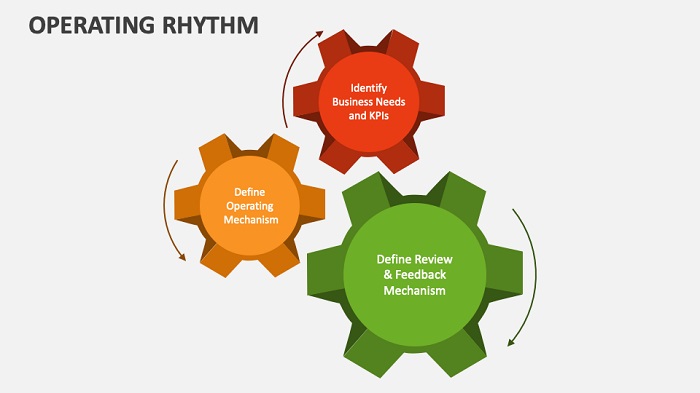
Entrepreneurs are often praised for their creativity, bold thinking, and willingness to take risks. Yet, when observing the founders who build companies that actually scale, a different trait stands out more than raw ambition: operating rhythm. This is the disciplined cadence of planning, execution, review, and recalibration that ensures progress doesn’t rely on adrenaline or improvisation alone.
The best entrepreneurs don’t win because they work the most hours; they win because they establish a repeatable rhythm that channels energy, focuses priorities, and prevents momentum from stalling. This rhythm becomes the backbone of sustainable growth, team culture, and strategic clarity.
What Is the Entrepreneurial Operating Rhythm?
An entrepreneurial operating rhythm refers to the structured, recurring cycle of activities that drive company performance. Instead of reacting to problems as they appear, this rhythm allows founders to maintain forward motion with deliberate intention.
Key Characteristics of an Effective Operating Rhythm
- Predictable cycles for reviewing goals and performance
- Clear communication patterns across teams
- Cadence-based decision-making instead of constant urgency
- Integrated feedback mechanisms for continual improvement
- Balanced pacing to prevent burnout and chaos
This rhythm acts as the organization’s heartbeat. It keeps every stakeholder — from leadership to the newest intern — aligned around what matters and why it matters now.
Why Rhythm Becomes Essential During the Scaling Stage
During early startup phases, chaos can sometimes fuel breakthroughs. A founder might manage everything personally, shift priorities daily, and make decisions on instinct. But as a business grows, this chaos becomes a liability.
Scaling introduces:
- More people
- More systems
- More stakeholders
- More decisions
- More consequences
Without rhythm, the organization becomes a patchwork of independent efforts, conflicting priorities, and constant fires. Sustainable scale demands consistency, not constant reinvention. High-performing founders understand this transition point and intentionally shift from reactive movement to structured, rhythmic execution.
Building the Entrepreneurial Operating Rhythm
Establishing an effective operating rhythm requires design, not accident. Below are the core building blocks.
- Strategic Priority Anchors
Every operating rhythm begins with clear, non-negotiable priorities. A founder cannot allow the strategy to change every time a new idea appears. While innovation remains vital, decision-making must be anchored to core objectives.
Key elements include:
- A clearly defined mission and measurable outcomes
- A limited number of focus areas (typically 3–5 per quarter)
- Pre-defined criteria that guide “yes/no” decisions
When the entire organization understands these anchors, execution becomes faster because energy no longer gets wasted on misalignment. - Cadenced Planning Cycles
Successful founders implement structured planning cycles:
- Annual planning for direction and targets
- Quarterly planning for strategic execution themes
- Weekly planning for tactical priorities
- Daily planning for what must get done today
This multi-level planning prevents drift. It ensures the long game and short game are always synchronized. While establishing these cycles is crucial, the true impact comes from the quality and effectiveness of the planning itself. Many organizations struggle to move beyond a perfunctory exercise, missing opportunities for genuine strategic alignment and measurable outcomes. Adopting a structured approach can transform annual planning from a mere administrative task into a powerful driver of organizational success. By focusing on clear objectives, systematic execution, and continuous progress visibility, businesses can ensure their yearly goals translate into tangible results and sustained growth. Understanding annual planning best practices is key to fostering accountability and ensuring every team member contributes effectively to overarching strategic objectives.
- Meeting Rhythms That Add Clarity (Not Noise)
Meetings are notorious time-wasters, but entrepreneurs who scale well use structured communications rhythms to accelerate collaboration.
Common high-performing rhythms include:
- Weekly team execution meetings focused on progress and blockers
- Monthly performance reviews analyzing data and adjusting tactics
- Quarterly leadership sessions for strategic evaluation
What matters most is consistency, time discipline, and agenda clarity. The rhythm must be predictable enough that the team knows exactly what information belongs where — reducing chaos and unnecessary discussions.
- Feedback and Measurement Cycles
Operating rhythm without feedback becomes stagnation. To ensure effectiveness, founders must integrate performance evaluation as part of the cycle.
This includes:
- KPI dashboards reviewed at consistent intervals
- Qualitative feedback loops from teams and customers
- Post-execution reflection sessions
This rhythm reinforces accountability while strengthening learning as a cultural norm rather than a corrective punishment.
- Energy and Capacity Management
Entrepreneurial culture often glorifies fatigue. But founders who scale recognize that performance depends on energy patterns, not endless effort.
Strong rhythms incorporate:
- Work blocks for deep focus
- Delegation structures to prevent overload
- Personal renewal practices (exercise, rest, mental downtime)
By protecting cognitive and emotional capacity, founders maintain long-term decision quality — the asset upon which the entire venture relies.
The Founder’s Role in Sustaining Rhythm
Even if the operating rhythm is designed well, it collapses without consistent leadership modeling. Founders must:
- Show up to the same rhythms they expect the team to follow
- Communicate priorities with repetition and clarity
- Resist the urge to reintroduce chaos when excited by new ideas
The entrepreneur becomes the steward of stability. Their behavior sets the tone for how the company works, reacts, and grows.
How Rhythm Accelerates Decision-Making
A strong operating rhythm speeds up execution by reducing uncertainty. When people know:
- What decisions they are empowered to make
- How progress is evaluated
- When strategy gets reviewed
- Which priorities matter most
They no longer wait for direction. Execution becomes decentralized and confident.
Sustaining Rhythm During Growth and Change
Markets shift. Competitors emerge. Opportunities evolve. The purpose of rhythm is not rigidity — it’s adaptability with structure. As conditions change, the rhythm allows entrepreneurs to pivot with control, rather than scramble in reaction. The rhythm is the mechanism that turns agility into strategic advantage instead of frantic motion.
Conclusion
Entrepreneurs who scale are not just dreamers or relentless workers — they are architects of rhythm. They understand that momentum is not an accident; it is engineered. By establishing structured cycles of planning, communication, execution, and reflection, founders create the conditions for sustainable growth, unified teams, and strategic clarity.
In a world obsessed with speed, rhythm becomes the real competitive advantage.
FAQ
- How often should an entrepreneur adjust their operating rhythm?
Adjust quarterly to review effectiveness, and evolve annually to reflect larger strategic shifts. - Can small teams benefit from operating rhythm, or is it only for larger companies?
Even teams of two or three gain value from structured cadence because it prevents confusion and misalignment. - What is the most common mistake founders make when establishing rhythm?
Overcomplicating the structure. Simple, consistent rhythms outperform complex systems that are hard to maintain. - How does operating rhythm impact company culture?
It creates stability, accountability, and clarity, which foster trust and reduce internal friction. - Does a strong operating rhythm reduce creativity?
No. Rhythm removes clutter and confusion, freeing mental energy for creative problem-solving. - Can operating rhythm support remote or hybrid teams?
Yes, it is one of the most effective tools for keeping distributed teams aligned and productive. - How long does it take to see results from implementing a new rhythm?
Most organizations begin seeing noticeable performance improvement after one to two full quarterly cycles.


