Temporal Demand Shaping: How Advanced Marketers Influence When Customers Decide to Buy
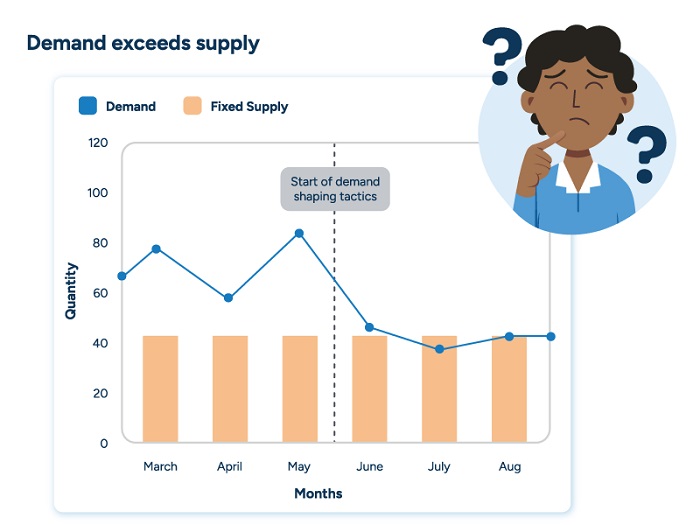
Most marketing strategies focus on why customers make buying decisions or how to persuade them. But one of the most overlooked areas of competitive growth lies in influencing when customers make decisions. This approach is known as Temporal Demand Shaping, and it is rapidly becoming a high-impact strategy among performance-focused marketers, SaaS brands, and consumer enterprises seeking to control demand patterns rather than merely react to them.
Temporal Demand Shaping allows brands to strategically influence the timing of customer interest, urgency, and purchasing behavior. Instead of waiting for demand spikes or responding to external market conditions, businesses learn to create demand at optimal moments that benefit both revenue and operational efficiency.
This strategy does not chase consumers. It redesigns consumer decision timing.
What Is Temporal Demand Shaping?
Temporal Demand Shaping is a marketing framework that proactively encourages customers to buy at specific, strategically chosen times. It leverages psychological triggers, personalized timing models, segmentation data, and behavioral signals to guide the buyer’s internal motivation curve.
The objective is not only to increase purchases, but to influence the rhythm and pace of demand so that:
-
Revenue is more predictable
-
Launches and campaigns perform more consistently
-
Inventory and operational workflows align with demand surges
-
Customer behavior becomes deliberately shaped, not accidental
This strategy moves marketing from reactive persuasion to proactive timing control.
Why Timing Has Become More Valuable Than Messaging
Modern consumers are overloaded with choices. They don’t just want the right solution—they want it at the right moment in their emotional or functional cycle.
The brands that influence purchase timing gain a competitive advantage because:
-
They reduce decision fatigue
-
They intercept competitors before comparison even begins
-
They align offers with the customer’s mental state rather than pushing promotions blindly
-
They create recurring patterns in buyer behavior
Timing is now as decisive as pricing, value proposition, or brand reputation.
Core Psychological Triggers Behind Timing-Based Decisions
Understanding how to shape demand requires aligning with natural decision rhythms. People act when internal psychological and emotional indicators match convenience, urgency, and perceived value.
Key decision-timing triggers include:
-
Momentum: The feeling of progress driving action
-
Sunk Cost Awareness: Investment increases commitment
-
Scarcity Cognition: Limited availability accelerates timing
-
Temporal Discounting: Near-future rewards feel more valuable
-
Pattern Recognition: Routine and habit influence repeat purchases
Temporal Demand Shaping amplifies these triggers strategically and ethically.
The Strategic Framework of Temporal Demand Shaping
1. Mapping Customer Time-Based Behavior Patterns
High-performing marketers analyze when customers:
-
Research solutions
-
Compare options
-
Feel urgency rise
-
Commit to purchases
-
Reconsider loyalty
Rather than using simple funnel stages, this approach maps time cycles such as weekly patterns, financial cycles, emotional windows, and industry rhythms.
Examples:
-
Fitness customers are more motivated at the start of each week
-
Professional service clients make decisions at quarter transitions
-
E-commerce customers purchase more during evening relaxation hours
The key is discovering your market’s decision clock.
2. Designing Demand Acceleration Points
After identifying natural timing rhythms, the next step is to engineer accelerators that shift customers from passive intention to active decision.
Common accelerators include:
-
Limited-time value boosts (not discounts)
-
Deadline-based enrollment windows
-
Tiered onboarding availability
-
Seasonal or environmental alignment messaging
Acceleration is about momentum, not pressure.
3. Creating Demand Recovery Triggers
Not all customers act when momentum peaks. Demand recovery messaging is designed to revive expired intent without repeating generic follow-ups.
Examples of recovery triggers:
-
Guided micro-assessments that re-clarify needs
-
User-specific incentive upgrades
-
Social proof moments tied to time proximity
-
Reminders aligned to the customer’s original behavioral pattern
Recovery messaging avoids chasing. It reignites.
4. Building Behavioral Habit Loops
Long-term demand shaping is achieved when customers start expecting to engage at predictable times.
To build habit loops:
-
Anchor educational content to repeated time cycles
-
Reinforce brand presence at consistent intervals
-
Establish predictable promotional rhythms
-
Introduce micro-routines that involve your product or service
When the customer’s internal timing syncs with your strategic timing, demand becomes self-reinforcing.
How Technology Enhances Temporal Demand Shaping
Modern marketing automation, predictive analytics, and AI-powered segmentation enable timing optimization at scale.
Tools that support this strategy include:
-
Behavioral segmentation dashboards
-
Predictive churn analytics
-
Dynamic content automation
-
AI-based send-time optimization engines
-
Multi-touch attribution models
Technology does not replace strategic timing. It enables precision.
Practical Applications Across Industries
SaaS and Subscription Models
SaaS brands can use temporal demand shaping to influence trial-to-paid transitions, renewal timing, and commitment upgrades.
E-Commerce Retail
Retailers can synchronize product drops, micro-collections, and seasonal scarcity to build demand cadence.
Hospitality and Travel
Demand shaping can help smooth seasonal variability and increase bookings during off-peak cycles.
Service and Consulting Firms
Consulting pipelines become more predictable when client decision windows are guided rather than waited on.
Measuring Success in Temporal Demand Shaping
Key performance indicators include:
-
Time-to-purchase reduction
-
Lead nurturing cycle compression
-
Engagement cadence stability
-
Predictability of demand surges
-
Revenue smoothing across quarters
Success looks like less reactive marketing and more stable revenue arcs.
Conclusion
Temporal Demand Shaping is not about manipulating customers. It is about aligning your marketing rhythm with the customer’s emotional and decision-making rhythm—then guiding that rhythm forward. It transforms marketing from a push mechanism to a strategic timing system that influences behavior without forcing it.
The brands that master this approach become the brands that feel like they always show up right when the customer needs them—even before the customer fully realizes it.
FAQ
1. Is Temporal Demand Shaping the same as urgency marketing?
No. Urgency marketing pushes pressure. Demand shaping focuses on aligning with natural decision timing and enhancing momentum.
2. Does this strategy require advanced data tools?
Data improves precision, but the foundational approach can be implemented with strong behavioral understanding and segmentation.
3. Can small businesses use demand shaping effectively?
Absolutely. Smaller brands can often implement timing-based messaging more quickly than larger companies.
4. How is this different from seasonal marketing?
Seasonal marketing follows external patterns. Demand shaping creates internal timing patterns in the customer.
5. What is the biggest mistake to avoid?
Using discounts as the primary timing lever. The strategy should be triggered by value and momentum, not price cuts.
6. How long does it take to see results?
Most brands begin to see measurable timing improvements within 4–12 weeks depending on the length of the consideration cycle.
7. Can this work in markets with impulsive buyers?
Yes, especially when timing triggers guide impulse moments more consistently and predictably.